
Dental implants
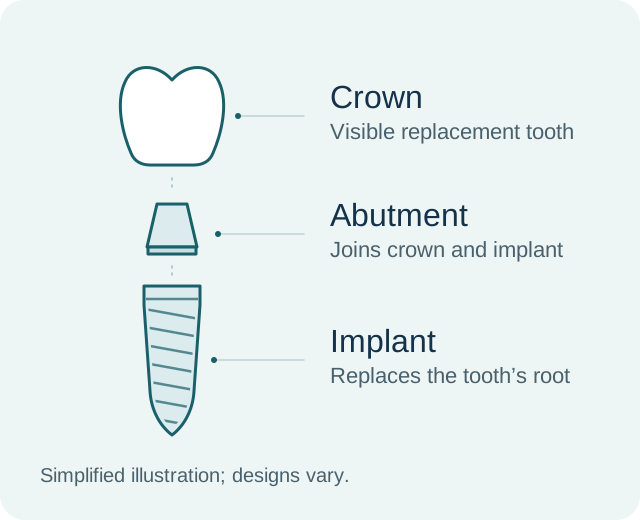
A dental implant is an artificial tooth root placed in the jawbone to support a replacement tooth or teeth. Dental implants can support a single-tooth crown, a bridge for multiple missing teeth, or full-mouth prosthetics.
Your dentist will assess your teeth, gums, bone and general health to determine suitability and recommend a personalised treatment plan. We’ll explain your options, healing, costs and ongoing care before you decide.
- CBCT assessment
- Intraoral scanning
- Digital planning
- Guided surgery

How dental implants work.
When an implant is placed, its initial stability comes from its fit within the bone. As healing progresses, bone forms against the implant surface and creates a firm biological connection. This process is called osseointegration.
Once the implant is ready to support a restoration, an abutment connects it to the replacement tooth or teeth. Your dentist checks healing and stability before deciding when to fit and load the restoration.
Healing varies with bone quality, general health and any grafting. Protecting the implant during this period, followed by good cleaning and regular reviews, helps support its long-term function.
Stages of treatment
From the first assessment to caring for your new teeth.
Assessment and planning
We assess your mouth and medical history. CBCT imaging and intraoral scans, where indicated, inform digital planning and the suitability of guided implant surgery.
Implant placement
The implant is placed in the jaw. Your dentist explains the procedure, anaesthetic and immediate aftercare.
Time to heal
The bone needs time to integrate with the implant. Healing and any temporary teeth are planned around your circumstances.
Your replacement teeth
When healing allows, your crown, bridge or denture is made and fitted, with checks of its fit and bite.
Long-term care
Daily cleaning and regular professional reviews remain essential after the replacement teeth are fitted.
Before you begin
Your consultation is a chance to ask questions and agree a plan you feel comfortable with.
Are implants suitable for everyone?
No. We assess your oral health, medical history, medicines and bone support first. Gum disease may need treatment, and some people need bone grafting or a different replacement option.
How long does treatment take?
Treatment usually involves several visits and a healing period. The full timescale depends on your mouth, the restoration and any additional procedures. We’ll explain your expected schedule before treatment starts.
What about comfort and risks?
Implant placement is commonly performed with local anaesthetic. Swelling or discomfort can follow. Risks include infection, failure to integrate and, depending on the site, changes in sensation. Your dentist will explain the risks relevant to you.
How do I look after implants?
Follow your personalised cleaning and review plan. Smoking and gum disease can affect implant health. Replacement teeth and components can wear or need repair, so maintenance continues long term.
What are the alternatives?
Conventional bridges, removable dentures or leaving a space may be options. We’ll discuss the benefits, limitations and costs of the choices appropriate for you.
Book a consultation.
Get a clear explanation of your options and a personalised treatment estimate.