
Wisdom teeth
Wisdom teeth are the last molars at the back of the mouth. When there is too little space for them to come through normally, they may grow at an angle, become trapped (impacted), or remain partly covered by gum. This can make the area difficult to clean.
Food and bacteria can collect around a partially erupted tooth, causing recurring gum infections, pain or swelling. Decay or damage may also affect the wisdom tooth or the neighbouring molar. Removal may be recommended to treat these problems; teeth without problems may be monitored after clinical assessment and appropriate X-rays.
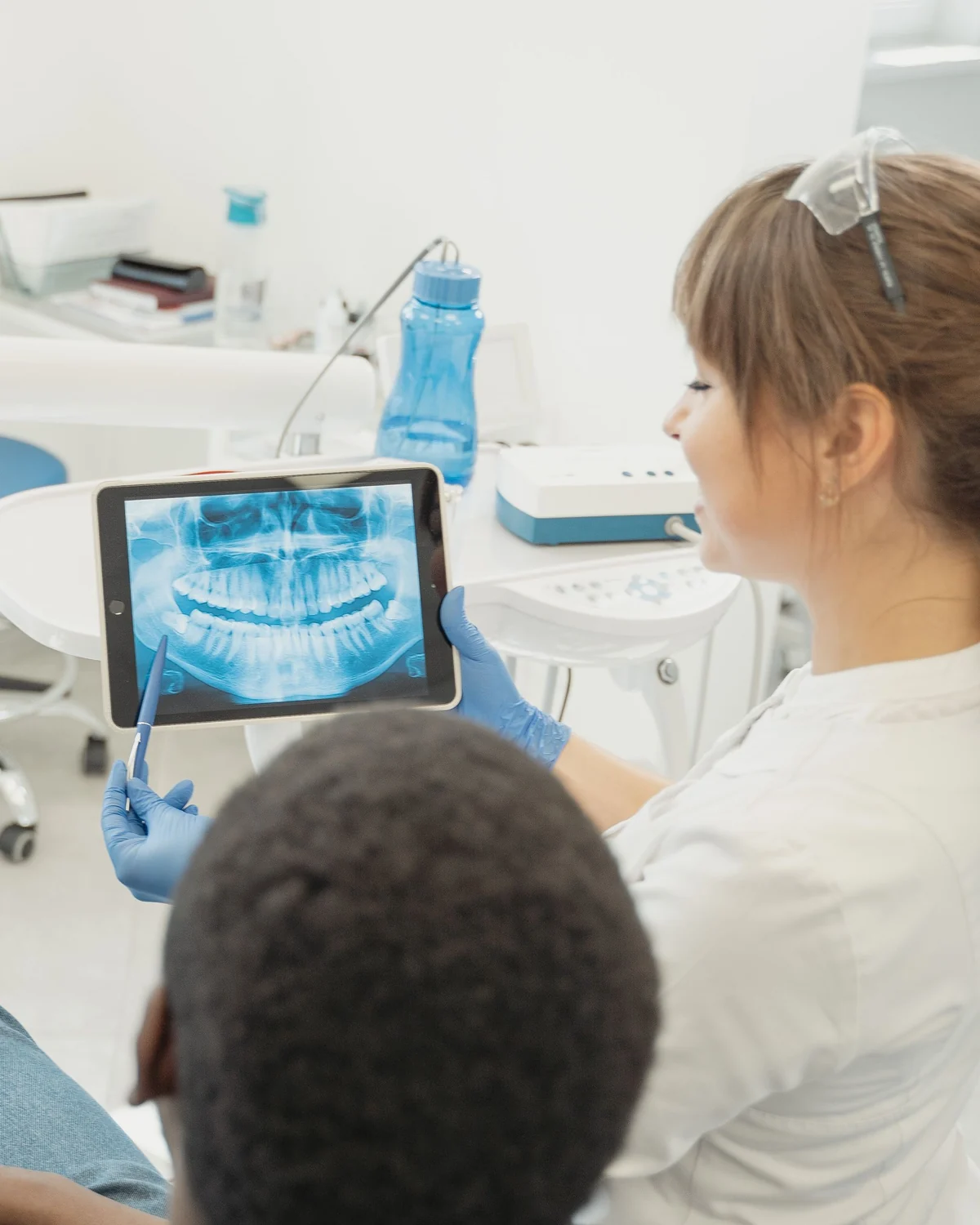
What the procedure involves
Diagnosis and assessment
We discuss your symptoms and medical history, examine the tooth and surrounding gum, and check for infection, decay or damage to adjacent teeth. Healthy wisdom teeth do not automatically need removal.
Radiography and planning
A panoramic X-ray can show the tooth’s position and roots. A CBCT scan may be recommended when additional three-dimensional detail would affect planning, such as the relationship to a nearby nerve.
Removal when needed
We assess the tooth and its position to decide on the most appropriate way to treat it. Depending on the findings, this may involve a normal extraction, surgical extraction or, when indicated, a coronectomy, where the crown is removed and the roots are left in place. We explain the recommended approach and relevant risks before treatment.
Before you begin
Common questions to help you feel informed and ready for your consultation.
Does an impacted wisdom tooth always need removal?
No. A tooth without disease or other problems may be monitored. Removal is considered when there is a clear reason, such as recurrent infection, decay or damage to nearby structures.
Will I need a CBCT scan?
Not routinely. Your dentist first considers the examination and standard X-rays. CBCT is recommended only when the extra information would help assessment or treatment planning.
Will the procedure hurt?
We use profound local anaesthesia so treatment should be painless and comfortable. Patient comfort and quality care are our top priorities. Pressure or movement may still be felt.
What should I know before surgery?
We explain likely swelling and soreness, recovery and risks such as dry socket, infection or changes in sensation. These depend on the tooth’s position and your health. Your dentist discusses any alternatives or referral that may be appropriate.